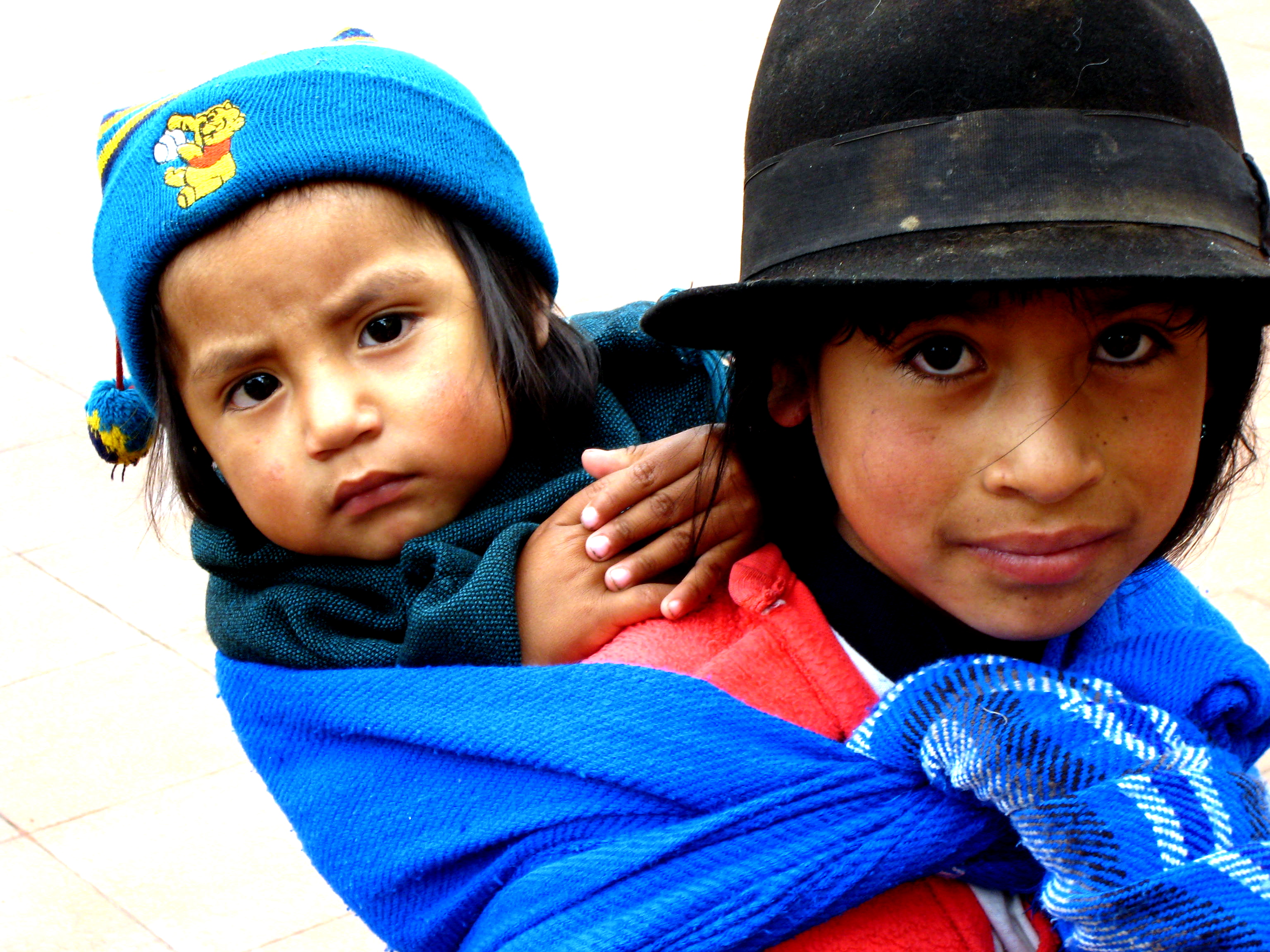
The second week I was volunteering at a foundation for street children in Guayaquil, Ecuador, during my semester abroad in college, a volunteer doctor asked if I would sit in on his check-ups with the young women (age 6-14). Once their clothes were removed, child after child showed scars, bruises, hidden shame and pain. I began to realize that these children, who sold soda on the street for 5 cents and went days before collecting enough money to return home, were survivors and pawns in an oppressive, patriarchal society over which they had no control.
The world I had known was stripped bare, exposing the harsh realities and structural inequities of decades of oppression. The lives of these children and their families were so radically different from my white, middle-class life in upstate New York. The more I learned, the more I realized just how much I did not know, a mental shift that continues to drive my curiosity, behavior and interaction with students and with myself today.
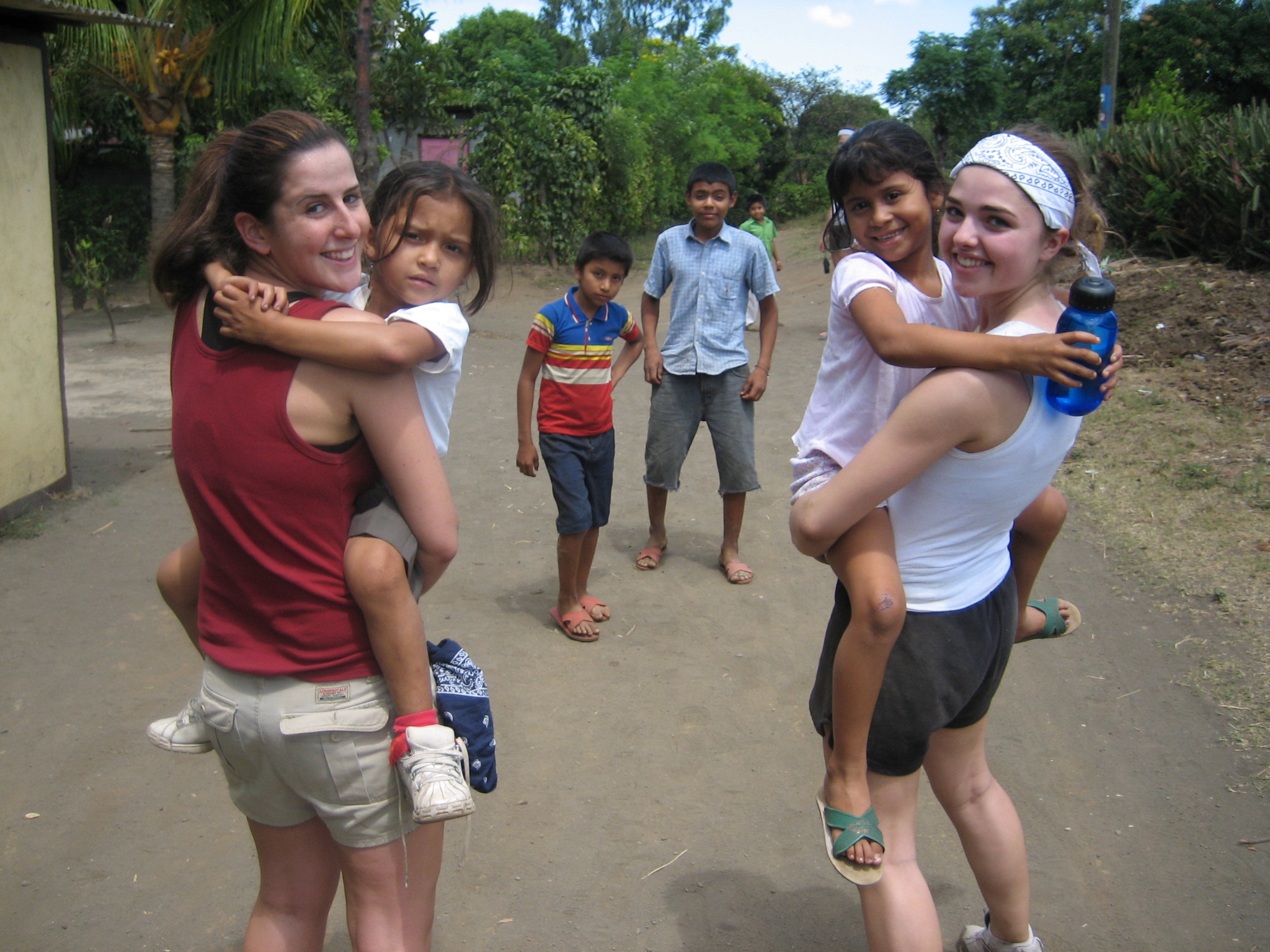
As my semester in Ecuador unfolded, I became painfully aware of our unjust world and the need to work for positive change. This experience, compounded by my service experiences in the Dominican Republic (in high school), Nicaragua (in college), and leading service trips in Costa Rica (post-college), prompted me to explore the following questions for my Master’s thesis at Oregon State University (MS received Spring, 2014):
- What differences, if any, are there among students who did international service in college vs. those who attended traditional study-abroad programs or did not go abroad at all?
- Does studying abroad foster significant changes in global citizenship and challenge and expand students’ worldviews? If so, to what extent, compared with students who engaged in international service-learning?
- How do various factors impact students’ levels of global citizenship — is global citizenship a result of maturity alone, or do any of the following factors have a significant impact: race/ethnicity, gender, year in school, age, length of time abroad, host family experience, community service abroad and more than 40 hours of community service?
First, I explored what educators call “global citizenship” and best practices for service-learning via the following:
- I researched the historical context of civic education and service-learning (Astin & Sax, 1998; Bacon, 1997; Dewey, 1951; Hartman, 2008; National Service-Learning Clearinghouse, 2008; Rocheleau, 2004).
- I compiled results from studies demonstrating the positive impact of service-learning on students’ growth, ambition, engagement and critical thinking abilities (Batchelder & Root, 1994; Berson & Younkin, 1998; Bryan, Schonermann & Karpa, 2011; Colsby, Bercaw, Clark & Galiardi, 2009; Corbett, 1977; Eyler & Giles 1997; Giles & Eyler, 1994; Kielsmeier, 2011; Krug, 1991; Markus, Howard, & King, 1993; Myers-Lipton 1998).
- I examined the academic, personal and social benefits of service-learning, particularly international service-learning (Gray, Murdock, & Stebbins, 2002; Metzger, 2006; Nofles, 2003; Opper, Teichler, & Carlson, 1990), such as higher levels of critical thinking skills (Opper, Teichler, & Carlson, 1990), cross-cultural effectiveness (Coryell, 2011), self-reliance, and self-confidence (Corda, 2007).
- I explored the “shadow side” of service-learning, focusing on international service-learning—how these experiences not only can exacerbate power differences and reinforce inequities between those who serve and those being served (Brown, 2011; Davis, 2006; Green, 2001; Kahn, 2011; Nieto, 2000; Pompa, 2002; Madsen-Camacho, 2004), but also lead to academic difficulties, cultural identity crises, anxiety, depression, social isolation, helplessness, interpersonal conflict, confusion, and anger among those who served (Hartman, 2008; Kiely, 2005; Kittredge, 1998; Martin, 1984; Sahin, 1990; Tonkin and Quiroga, 2004; Zapf, 1991).
- I demonstrated the need for critical service-learning, where students grapple with the intersections of power, privilege, and oppression on a personal level at the service site and at a global level by learning about the historical, political, and social systems that created and reinforce systems of oppression (Green, 2001; Kahn, 2011; Levinson, 1990; Madsen-Camacho, 2004; Mitchell, 2008; O’Grady, 2000; Pompa, 2002; Walker, 2000). For instance, students either learn how to serve a hot meal to the homeless, or they learn about why homelessness exists in the first place and what they can do as active citizens to help address this social phenomenon.
- I discovered that the literature suggests that certain program elements can have a dramatic impact on students’ levels of global citizenship. These elements include:
- Reflection (Lutterman-Aguliar & Gingerich, 2002; Peterson, 2002),
- Orientations and re-emersion workshops (Gaw, 2000; Hartman, 2008; Kiely, 2005; Kittredge, 1998; Martin, 1984; Sahin, 1990; Zapf, 1991; Tonkin & Quiroga, 2004),
- Critical service and an examination of root causes of global issues (Chesler, 1995; Chesler & Vasques Scalera, 2000; Groski, 2006; Mitchell, 2008; Pompa, 2002; Robinson, 2002),
- Overt examination of power and privilege (Kahn, 2011; Kendall, 2006; Madsen-Camacho, 2004; McKeown, 2009; Tatum, 1992),
- An analysis of power and privilege for all students (Nieto, 2000; Rosenberger, 2000), and
- For white students, continual reflection and analysis of their own white identity and white privilege (bell hooks, 1989; Endres & Gould, 2009; Green, 2001, Tatum, 1992; Simons et al., 2011).
- Reflection (Lutterman-Aguliar & Gingerich, 2002; Peterson, 2002),
- I reviewed various measures of global citizenship, deciding to use a scale put forth by Morais & Ogden (2011), where global citizenship is defined as the presence of social responsibility, global competence and global civic engagement, categorized by not only an awareness of the world around you, but also an awareness of the self.
 Methods:
318 students filled out questionnaires; they were grouped as those who (a) had engaged in experiential study abroad experiences (differing in length, ratio of classroom to service-learning time and host family versus dormitory or apartment living), (b) had participated in traditional study abroad programs (attending a university to take classes and living in a dorm, with no service component), or (c) did not study abroad at all.
Findings:
The results were striking. I found no significant differences in scores based on race/ethnicity, gender, year in school, age, or length of time abroad. However, students who had stayed with a host family or did community service – especially 40+ hours of community service –scored much higher on the global citizenship scale (the best scores of any group tested). Furthermore I found no significant difference between the traditional study abroad students and those who did not go abroad.
These dramatic findings suggest that studying abroad is not enough, a fact that is often ignored as educators push for students to study abroad, but might not be concerned whether the program has any cultural or service immersion components.
My findings indicate that intensive cultural immersion and service, particularly extensive service abroad, is a crucial component to promote global citizenship. Even after accounting for individual background and characteristics, as well as a study abroad experience, students who stayed with host families and engaged in service experienced significant gains in measures of global citizenship. These findings suggest that we must look beyond the checkbox of whether students study abroad or not, and create meaningful and reciprocal experiences in which students can engage, serve, and become culturally immersed in their host communities.
In an age categorized by “interdependence, rather than insularity” (Liberal Education & America’s Promise, 2009, p. 15), today’s graduates must be more globally informed, aware, and engaged than ever before as international markets merge and the world becomes exponentially more interconnected (Metzger, 2006) and “flat” (Freidman, 2005). The need to develop global citizens on campuses nationwide is immediate as more students than ever are studying abroad.
But this isn’t enough.
Study abroad programs might be falling short by failing to engage students in issues of social justice and/or empowering them to achieve real social change and develop as global citizens.
By deliberately incorporating immersion, structured reflection, and reciprocity into cultural and community immersion experiences, institutions of higher education can produce graduates who are more globally competent, engaged, and committed to multicultural and global issues and to making their local and global community more just.
Originally published March 18, 2014 on criticalservicelearning.org
Full thesis PDF available below
 Julia Lang Portfolio